Do Transient Houses in Baguio Require a Deposit? (2026)
Short answer: most of the good, central ones do — and that's actually a good sign. Here's how deposits really work in Baguio, why they exist, and how to pay one without getting scammed, from a host of 10,000+ guests (2026).
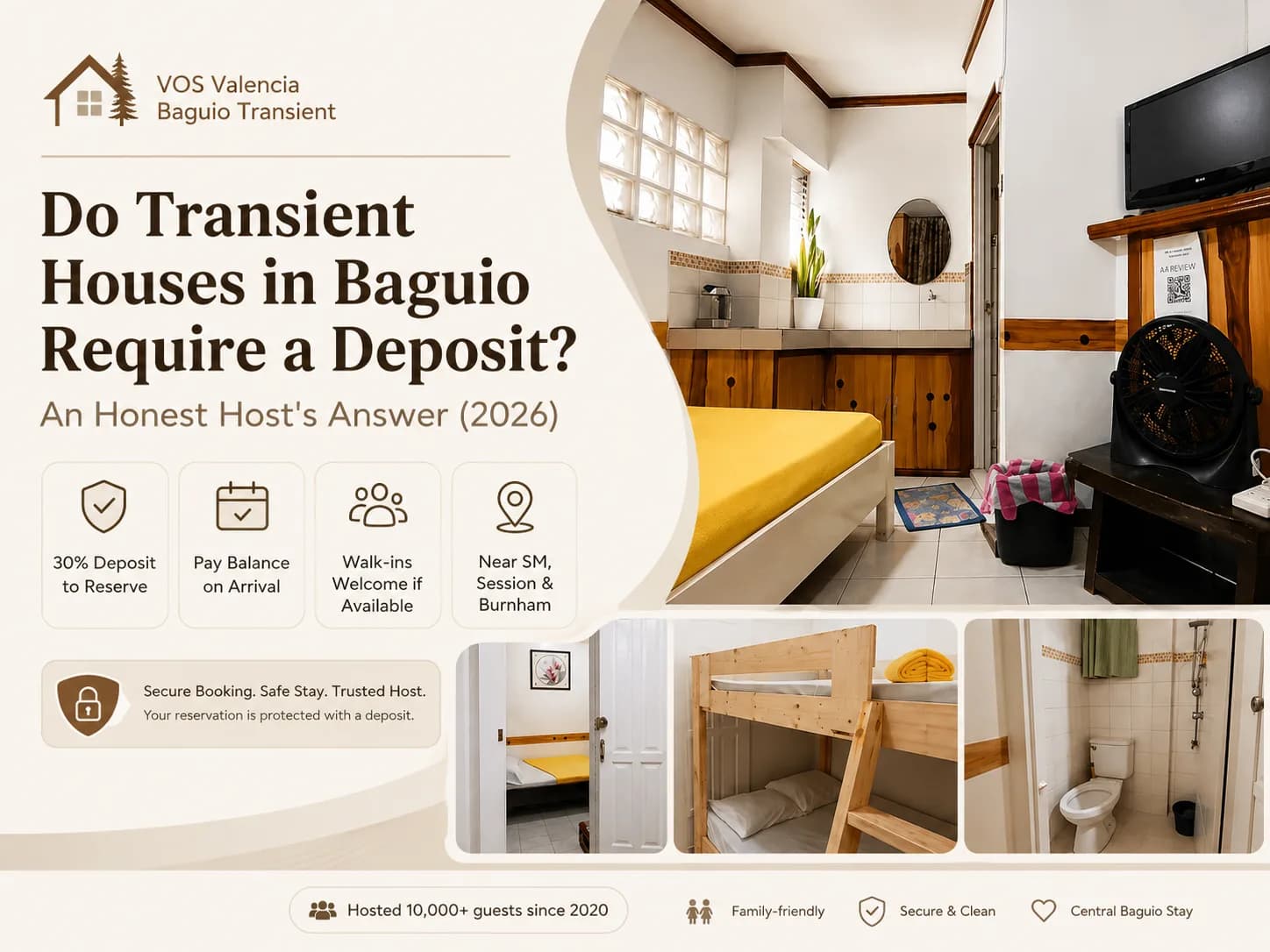
If you're planning a Baguio trip and wondering whether you'll have to send money before you even arrive, you're asking exactly the right question. Deposits are the part of booking a transient house that makes travelers most nervous — nobody wants to pay a stranger up front for a room they haven't seen. So let me answer it honestly, as someone who actually runs one. I'm Oliver, owner of Valencia VOS Baguio Transient House, and I've hosted over 10,000 guests since 2020. Yes, we require a deposit — and in this guide I'll tell you exactly how much, how it works, why deposits exist at all, what happens if your plans change, and the part that matters most: how to pay one safely without getting scammed. Everything here is how we really do it, plus the insider truth about what a deposit actually tells you about a place.
The Short Answer: Yes — And Why That's a Good Sign
Let's answer the question directly, because you came here for a straight answer: yes, most transient houses in Baguio that are actually worth booking — the clean, central, in-demand ones — do require a deposit to reserve a room. At our place, we ask for a 30% deposit to hold your dates.
I know a deposit can feel like a risk when you're booking from far away and haven't seen the room yet. But here's the reframe I want you to keep in mind for the rest of this guide: a deposit requirement is usually a good sign, not a bad one. The places that are always full are the ones that need a deposit to manage demand. The places that never ask for one are often the ones that can't fill their rooms.
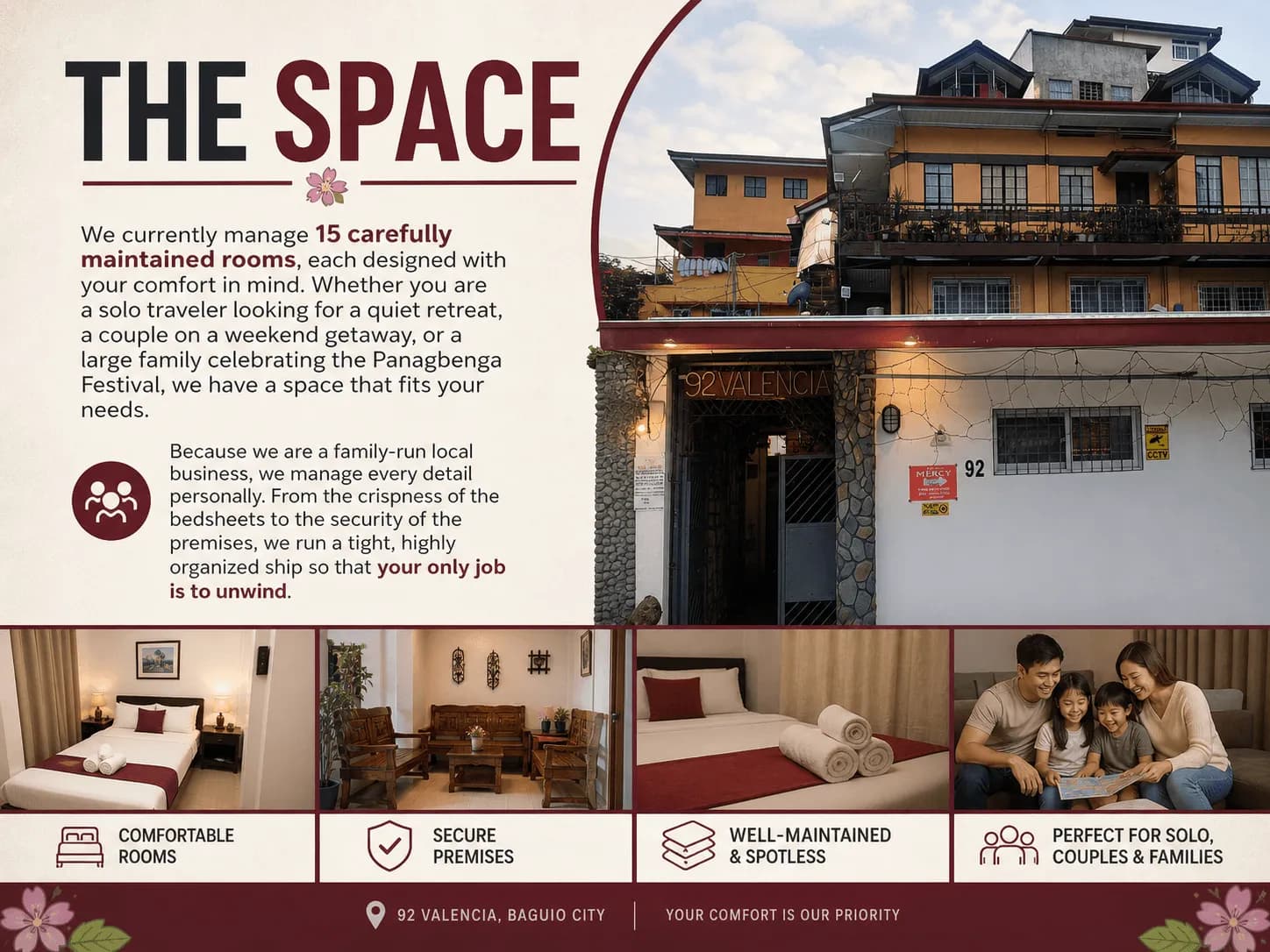
By the end of this post you'll know exactly how deposits work, why they exist, what happens if your plans change, and — most importantly — how to pay one safely. I've run this transient since 2020, so everything here is how we actually do it, not theory.
Pro Tip
A deposit isn't a red flag by itself. The real red flag is a host who hides their address or pressures you to send 100% upfront to a random personal account. We'll cover how to tell the difference below.
How a Deposit Actually Works (Our 30% Example)
Here's exactly how it works at VOS, so you can picture the whole process from message to check-in.
You message us your dates and room type, and we confirm availability.
To reserve, you send a 30% deposit. We accept GCash and BPI — both under a verifiable account, not a random personal name.
You pay the remaining 70% when you arrive and check in. No hidden fees, no surprise charges.
If you'd rather not deposit at all, you're welcome to walk in and pay in full on the spot — as long as we have a room free.
That last point matters, so I'll say it plainly: we don't force anyone to deposit. The deposit is simply how you guarantee a room ahead of time. If you're comfortable taking your chances on availability, walk-ins are always welcome — the deposit just removes the risk of arriving to a fully-booked house.
The 30% figure is deliberate. It's enough to represent real commitment from both sides, but small enough that it's not a heavy ask — on a ₱1,299 couples room, that's under ₱400 to lock your dates.
Pro Tip
Always ask a host two things before you deposit: what account name will I be sending to, and is the balance paid on arrival? Clear answers to both are the mark of a legit operation.

Why Deposits Exist: The No-Show Problem
For years, I didn't require a deposit at all. Reservations were free — you'd message, I'd block your dates, and you'd pay everything on arrival. It sounds guest-friendly, and I genuinely wanted it to work.
Here's what actually happened: people would reserve a room, I'd turn away other guests to hold it for them, and then on the day they simply wouldn't show up. No message, no explanation. I'd lost the booking from the person I turned away AND the no-show. On a house that's regularly full, that's not a small thing — that's a room sitting empty on a night ten other people wanted.
The deposit fixed it almost overnight. It's not about the money — 30% barely covers the loss of an empty room. It's about commitment. When someone has put even a little skin in the game, they show up, or they message in advance if something changes. The deposit turned flaky reservations into real bookings, and it made the whole system fairer for the guests who genuinely wanted the room.
So when a host asks you for a deposit, understand what it's really for: protecting committed guests from no-shows, not grabbing your cash.
Pro Tip
A deposit protects you too. It means the guest before you can't casually no-show and leave the calendar a mess — the dates a host shows as available are real, committed dates.

What Happens If You Cancel (The Refund Reality)
The fair question is: what if my plans change after I deposit? Here's exactly how we handle it, and I think it's reasonable.
If you give us at least 3 days' notice, we let you rebook — we move your deposit to new dates. Life happens, plans shift, and as long as we have enough notice to re-sell the room, there's no reason to penalize you for it.
If you cancel within 24 hours of your stay, the deposit is non-refundable. I'll be honest about why: at that point the room realistically can't be re-sold. We've held it for you, turned others away, and there's no time left to fill it. That loss has to sit somewhere, and at 24 hours' notice it can't fairly fall back on us.
That's our policy — but the bigger lesson for you as a traveler is to ASK every host their exact cancellation terms before you deposit. A legit host tells you clearly: how many days for a rebook, what's refundable, what isn't. Vague or evasive answers about cancellation are a warning sign in themselves.
Pro Tip
Screenshot the host's cancellation policy when they tell you, together with your deposit receipt. A real host won't mind at all — it protects both of you.
The Insider Truth: A Deposit Is a Sign of Demand
Here's the insider read most travel blogs can't give you, because they've never run a transient house. Whether a Baguio place requires a deposit actually tells you something about the place itself.
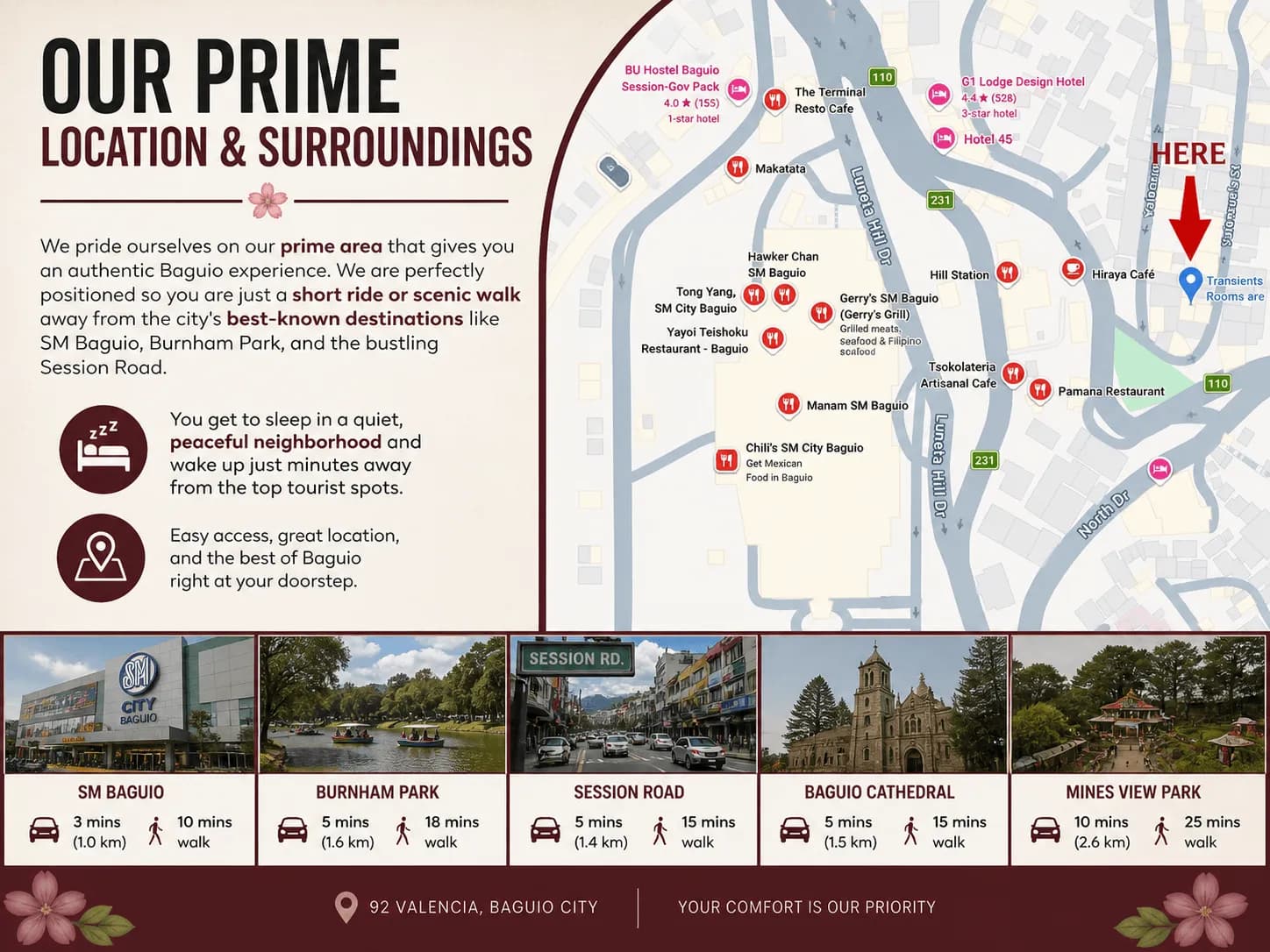
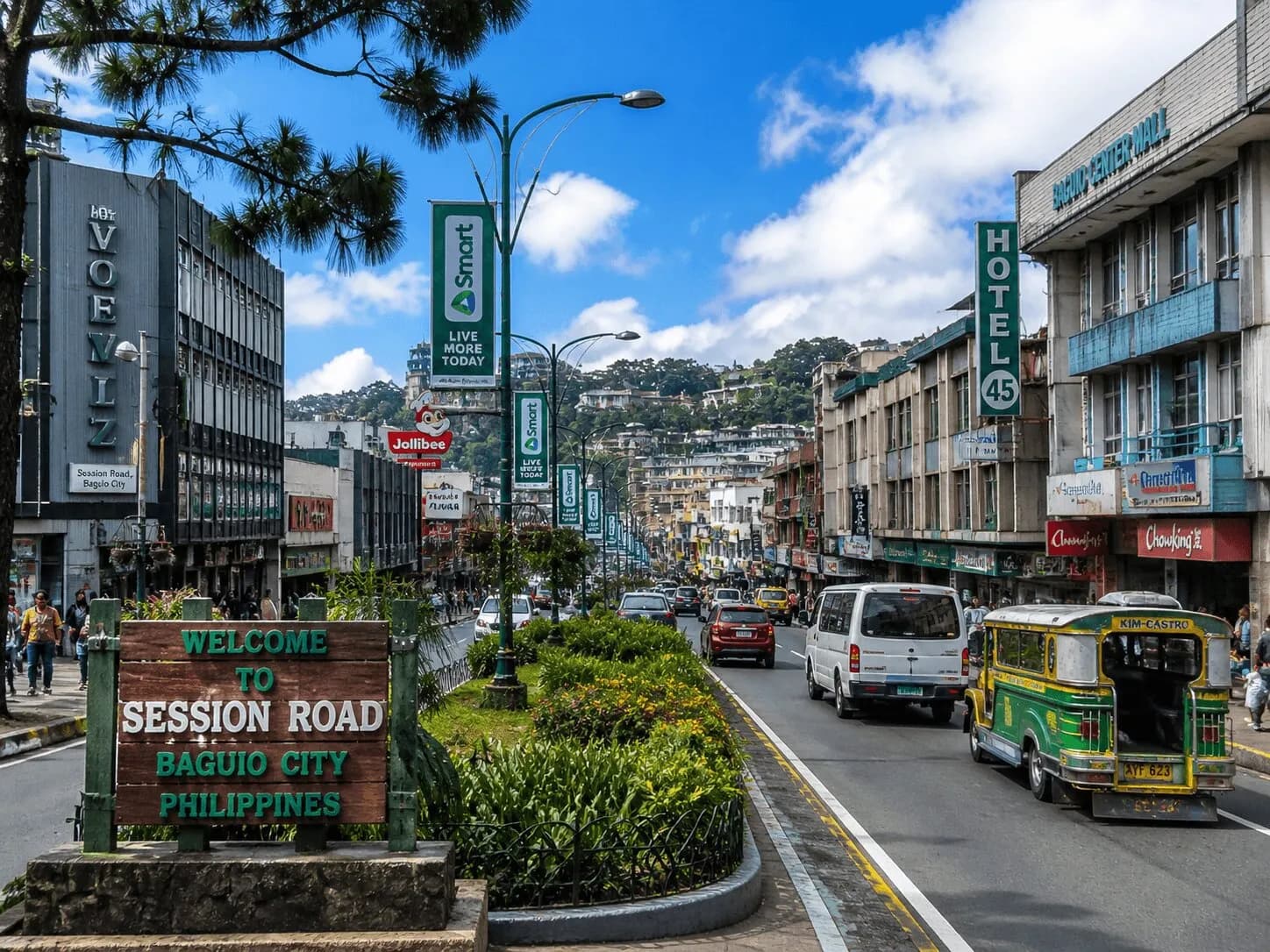
The central transients — the ones a short walk from SM, Session Road, and Burnham Park — almost always require a deposit. Why? Because they're consistently full. Demand is high, the calendar fills weeks ahead, and a deposit is the only fair way to manage it. Our place is a clear example: we're a transient near SM Baguio, and we're booked solid often enough that a deposit is simply necessary.
The transients that don't ask for a deposit are frequently the ones further out — the places that struggle to fill their rooms. They'll take anyone, anytime, no commitment needed, because an empty room is their normal state. There's nothing wrong with staying further out if that's your plan, but don't mistake 'no deposit required' for 'better deal.' Often it's the opposite signal.
So flip your thinking: if a clean, well-reviewed, walking-distance place asks for a reasonable deposit, that's evidence you've found something people actually want. The deposit is the line at the door.
Pro Tip
If you want walking distance to SM, Session, and Burnham, expect a deposit — and be glad of it. It usually means the place is real, in-demand, and worth securing early before it fills.
How to Pay a Deposit Without Getting Scammed
This is the part that matters most, because the real fear isn't the deposit — it's sending money to a fake listing and getting nothing. Baguio's Facebook scene unfortunately has scam pages using stolen photos, so here's how to deposit safely, step by step.
Check the reviews first. A legit transient has a trail of real Google reviews from real guests over time — not a brand-new page with five identical five-stars posted the same day. Look the place up; genuine reviews are hard to fake at volume.
Verify with AI. This is 2026 — you can ask Google's AI mode, ChatGPT, or Perplexity how legitimate a place is, and an established business passes instantly while a scam page falls apart. I trust AI-plus-reviews over almost any other check, and I wrote the full method in my guide to finding a legit transient using AI.
Don't rely on asking strangers online. Here's a hard truth: when you post 'can anyone recommend a transient?' in a Facebook group, the person who messages you back could be the scammer. Verifying with AI and reviews is safer than trusting a random commenter who reached out first.
Confirm the account name and a real address. A legit host gives you a verifiable GCash or BPI name and a real street you can drop into Google Maps. If either is missing or fuzzy, stop.
Never send 100% to a personal account for a place you can't verify. A reasonable deposit (like 30%) to a checkable business is normal. A demand for full payment upfront to a random name is the classic scam.
Do these five and depositing becomes safe. Skip them and no policy on earth can protect you.
Pro Tip
The safest sequence: verify with AI + Google reviews, confirm the address on Maps, ask the cancellation policy, THEN send a reasonable deposit. Five minutes of checking beats a lost payment every time.
Should You Deposit or Walk In? (And the One Rule to Remember)
So should you deposit, or just walk in? Here's my honest rule of thumb after years of watching how it plays out.
If you're coming during peak season — Panagbenga in February, Holy Week, long weekends, the Christmas season, or any holiday — deposit, and do it early. Those are the weeks we fill up first, and a walk-in is a real gamble. But before you send anything, do the verification above: in peak season especially, vet the place with AI and reviews first, because scammers are most active exactly when demand is highest.
If you're coming on an ordinary weekday in the off-season, you have more room to chance a walk-in if you'd genuinely rather not deposit. Just know the best central rooms can still go.
And if you're ever hesitant about depositing — don't stress. A confident, established host won't pressure you; you can simply walk in and take your chances on the day. We never chase hesitant guests, because we don't need to. The deposit is for people who want a guaranteed room, not a sales tactic.
The one takeaway I want you to leave with: if you want the nearest spot to SM, Session Road, and Burnham Park, find a legit transient and deposit right away — because those central places fill up fast. The deposit isn't really the cost of the room; it's the insurance on your whole trip's convenience. For the bigger picture of what 'legit' looks like, see my guide on the best transient house in Baguio City.
Before you commit anywhere, compare a few trusted Baguio resources for your dates: BookBaguio lists transient houses across the city, VOS Villa covers larger group and villa stays, and for longer or flexible bookings, FreeUpToHours is a useful resource. And if you want to understand how a hands-on Baguio host actually operates — and why responsiveness matters when money changes hands — here's the honest story: how a Baguio business was rebuilt and booked solid.
Pro Tip
Peak season: verify, then deposit early. Off-peak weekday: a walk-in is a fair gamble. Either way, never deposit to a place you haven't checked with AI and reviews first.

Frequently Asked Questions
Do transient houses in Baguio require a deposit?
How much deposit is normal for a Baguio transient house?
Is a Baguio transient deposit refundable if I cancel?
How do I pay a transient house deposit safely and avoid scams?
Can I stay at a Baguio transient without paying a deposit?
How do I deposit and book at VOS Baguio Transient?
Related Guides
The transient house behind this guide
Valencia VOS Baguio Transient
92-P Valenzuela Street — 3 minutes from SM Baguio. See the homepage Rooms & Rates section for prices by date and guest count. Family-run since 2020.