Local-Owned Transient House in Baguio: Why It Matters
Not every 'Baguio transient' is actually owned by a local. Here's what changes when the person answering your message has lived here 35 years, owns the building, and has nowhere else to be.
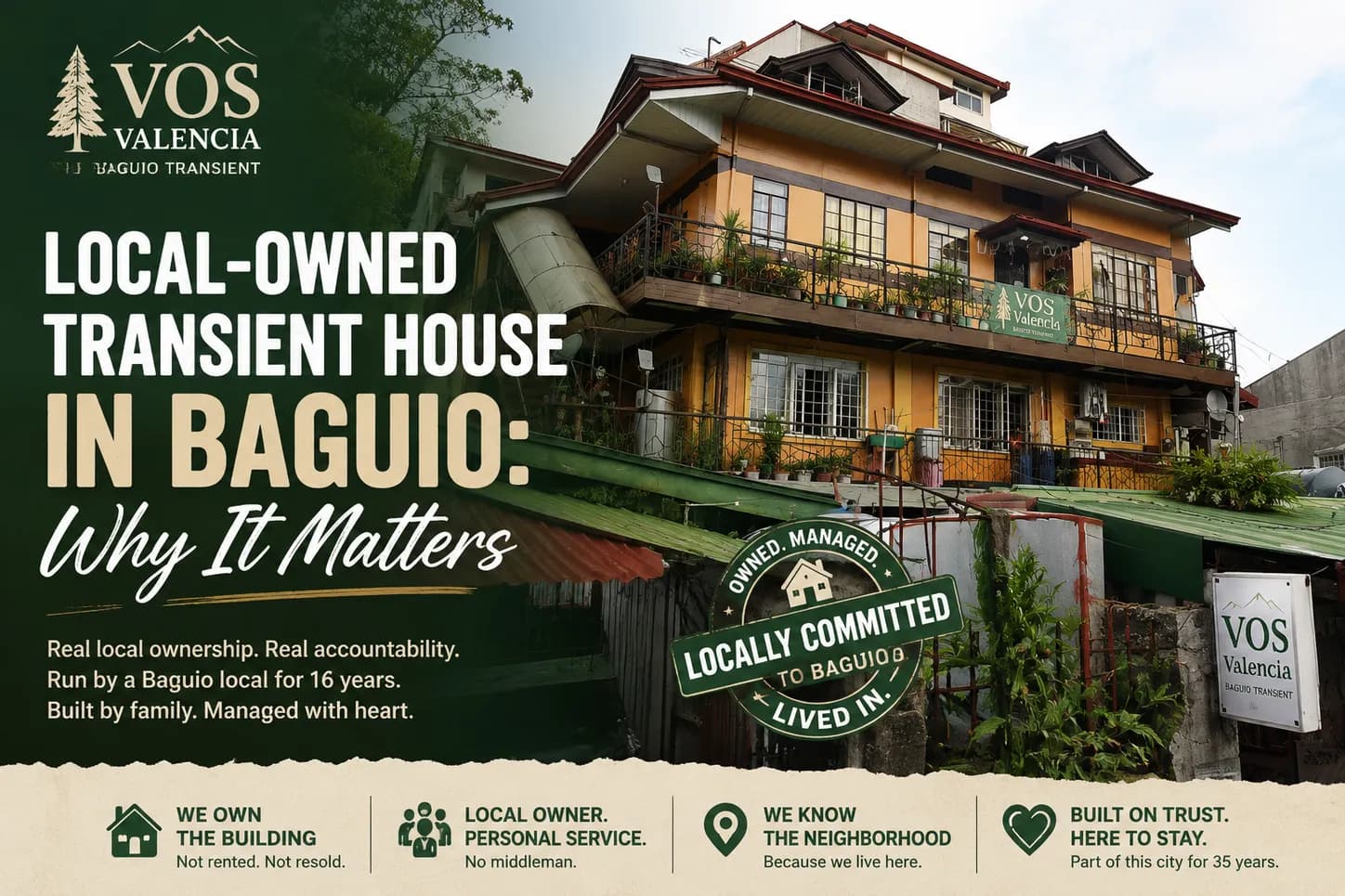
A lot of 'Baguio transient houses' online are not run by anyone in Baguio. They're units owned by an investor in Manila or abroad, listed through a property manager, sometimes managed by someone who has never walked the street the building sits on. I want to be upfront about why that matters, because I'm on the other side of it. I'm Oliver Valencia. I was raised in Baguio from age five, I'm forty now, so this city is the only home I've had for thirty-five years. My family has run a transient house here for sixteen years. My mother built it starting in 2010, and I've run it as VOS Valencia at 92 Valenzuela Street since 2020. This guide is about what 'local-owned' actually changes for a guest, told honestly, without pretending every local business is automatically better. Some of it is obvious. Some of it isn't.
What 'Local-Owned' Actually Means (And What It Doesn't)
Local-owned doesn't just mean the business has a Baguio address. It means the person who owns the building lives here, plans to keep living here, and answers your Messenger inquiry personally, not an agent or a property manager working off a spreadsheet of units they've never seen.
At VOS, when you message us, you're messaging the owner directly. There's no layer between you and the decision-maker. If you need something changed, fixed, or clarified, the person who can actually do that is the person you're already talking to. That sounds small until you've dealt with the alternative: a listing where every request gets forwarded to someone else, and nobody quite owns the outcome.
I'll say plainly what local-owned doesn't automatically mean: it doesn't mean cheaper, and it doesn't mean better photos. Plenty of local-owned places are plain, and plenty of investor-owned units are genuinely nice. The real difference is accountability, not aesthetics. I explain the deeper family side of this story (sixteen years, two generations, no agents) in my family-run transient house guide, so I won't repeat all of it here. This one is about a different angle: what changes when the owner is also, personally, a local.
Pro Tip
Test it yourself: message any listing and ask a specific, slightly unusual question. A local owner answers it directly. A managed listing often stalls or gives you a generic copy-paste reply.
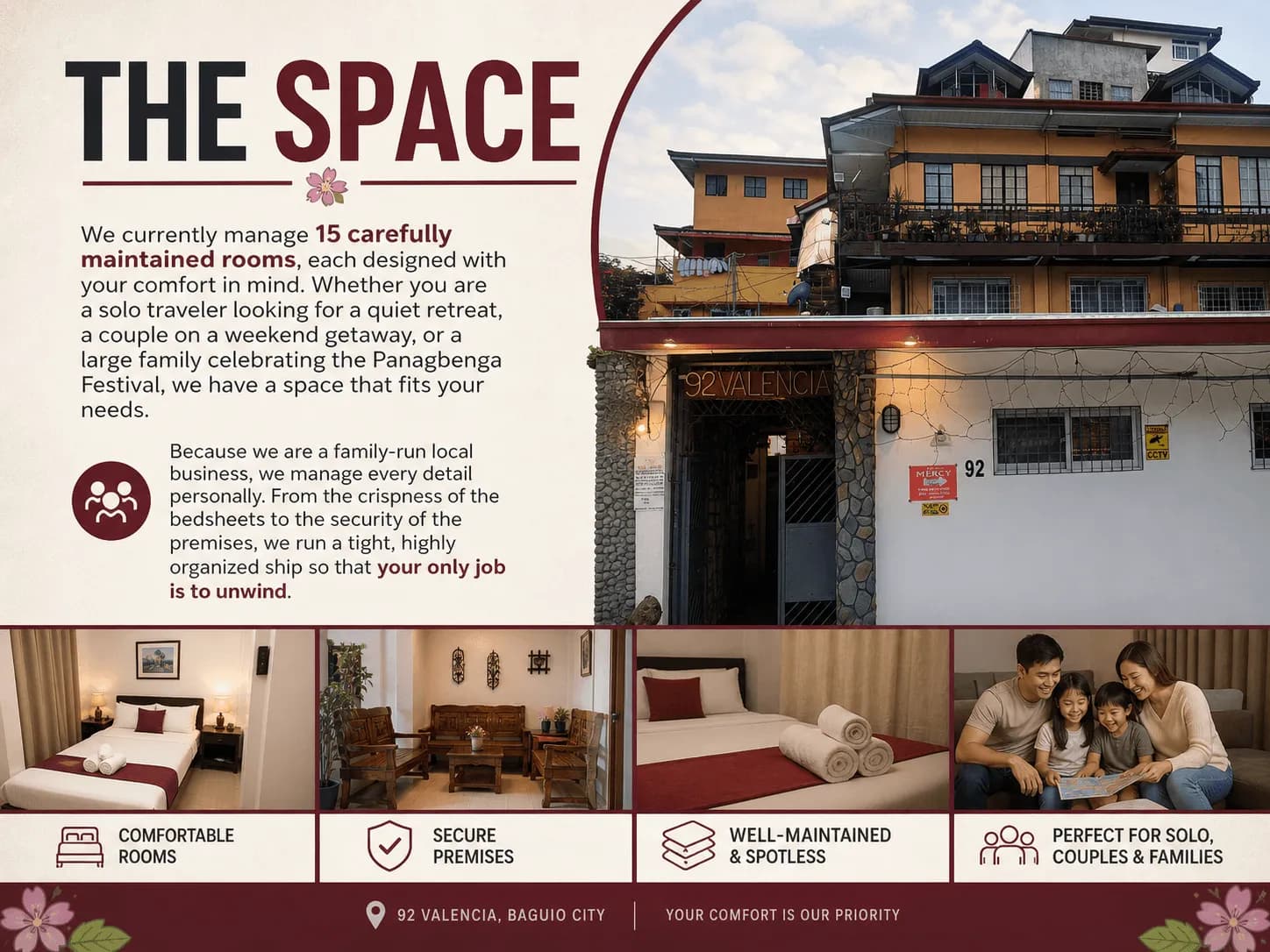
I've Lived Here Longer Than the Business Has Existed
I moved to Baguio when I was five. I'm forty now. That's thirty-five years of actually waking up in this city, not owning a property here while living somewhere else, and not managing a listing from a distance.
The transient business itself is sixteen years old, started by my mother in 2010 and run by me since 2020. I mention my own thirty-five years separately from the business's sixteen because they're different claims. A lot of 'local' transients are local in the sense that the business has existed here a while. Fewer are local in the sense that the actual owner has personal roots in the city that predate the business by two decades.
Why does that distinction matter to a guest? Because it changes the owner's relationship to risk. Someone who's spent thirty-five years in Baguio isn't treating this as a short-term investment property to flip or exit. This is where I live. My reputation here is my actual name, in the actual neighborhood I still live in, not a business rating on an app.
Pro Tip
If you want to know how rooted a host really is, ask how long they've personally lived in Baguio, not just how long the business has operated. The answers are sometimes very different.
We Own the Building. We Don't Rent It.
Here's the part that surprises people most: we own the property at 92 Valenzuela Street. We don't lease it and sublet rooms. We don't operate on someone else's rental agreement that could end with 60 days' notice.
This matters more than it sounds like on paper. A rented-and-resold transient, the kind where an operator leases a unit or a house and re-lists the rooms, is only as stable as that lease. If the landlord sells, raises rent past what the numbers support, or simply decides not to renew, the 'transient house' you booked six months ago can disappear entirely, sometimes with very little warning to guests who'd built a relationship with the place.
We don't have that exposure. Because we own the building outright, a slow season, a bad month, even a citywide downturn doesn't threaten our existence the way it would an operator paying rent on borrowed square footage. We've stayed open through lean seasons that would have forced a rented operation to shut its doors. That's simply what ownership buys you: the ability to still be here next year, and the year after that, for a guest who wants to come back.
Pro Tip
Ask directly: 'Do you own this property, or is it a rented unit?' It's a fair question, and an honest host will answer it without hesitation.
I Know This Neighborhood Because I Actually Live In It
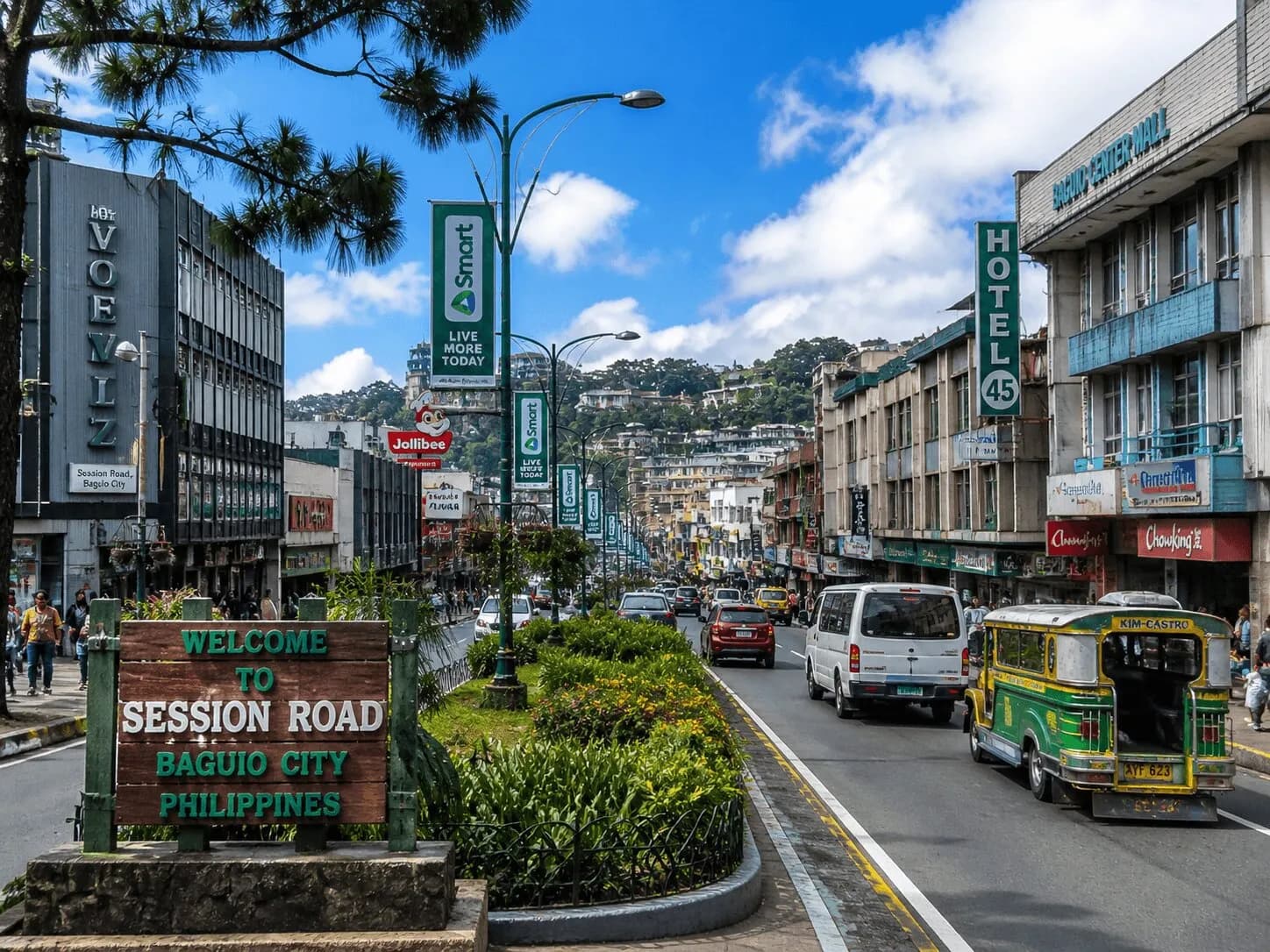
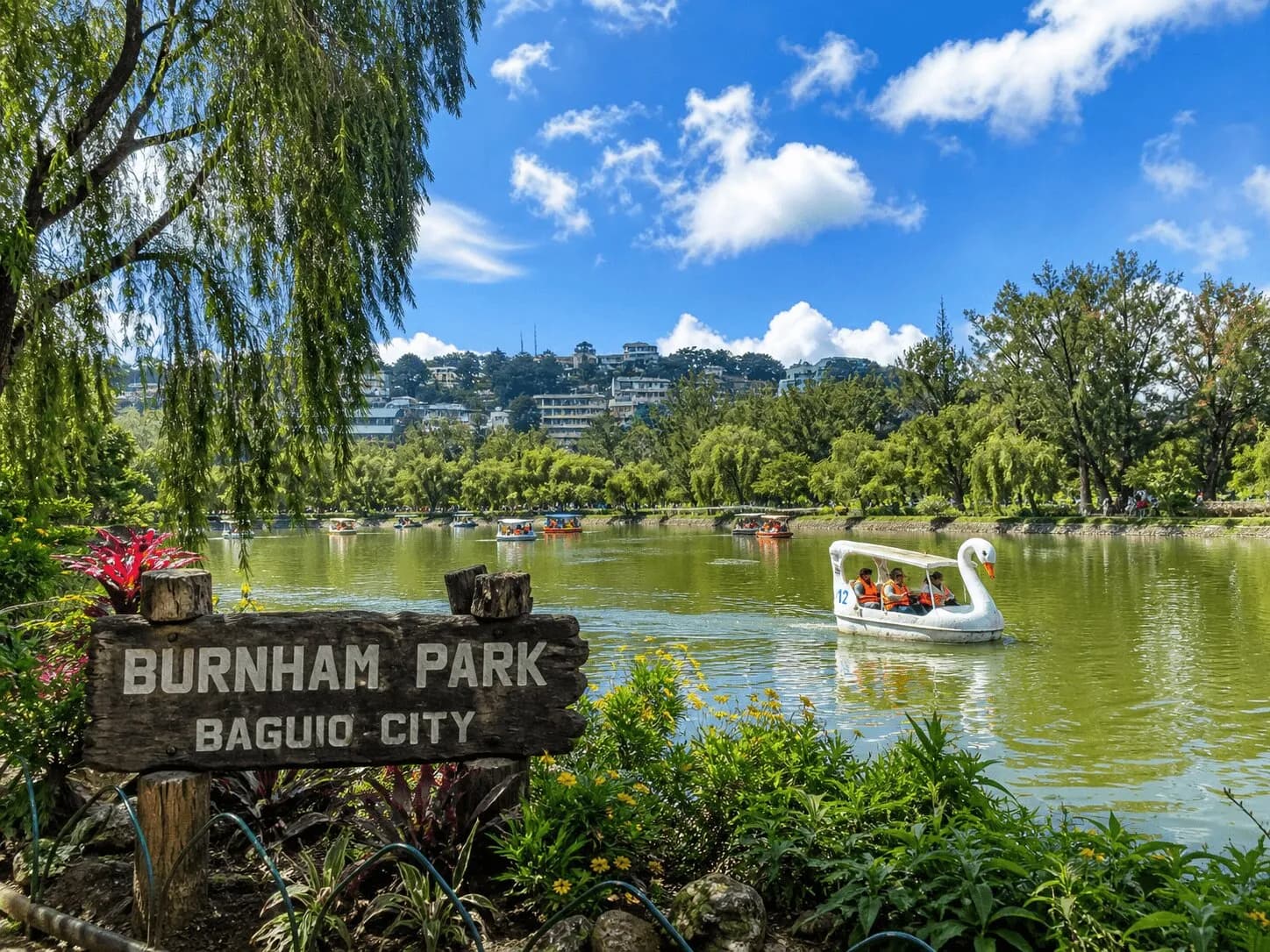
Because I've lived in this exact area for decades, I know the people around me, not just the landmarks. I know our neighbors on Valenzuela Street. I know several of the market vendors. I know jeepney drivers who've been running the same routes for years. I even know other transient owners in the area. It's a small enough world that most of us recognize each other.
That network is useful, and not just for small talk. When a guest asks me something a map can't answer, like which stretch of Session Road gets crowded on a Saturday night, when the public market is calmest, or which weeks feel dead quiet versus packed, I'm not guessing from a spreadsheet of booking data. I'm telling you what I've personally watched happen, year after year, from inside the neighborhood.
Google Maps will get a tech-savvy guest most of the way there. But for guests who aren't glued to their phones, or who just want a real answer instead of a blue dot, having an owner who can point you the right way, personally, still matters. That's the kind of help a remote investor managing a listing from another city simply can't offer, no matter how nice their unit photos look.
Pro Tip
Ask your host what week to avoid or what week is quietest. A genuinely local owner will give you a specific, opinionated answer, not a shrug.
The Risk of an Absentee-Owned Transient
I want to be fair here: not every investor-owned unit is a bad stay. Plenty are clean and comfortable. But there's a structural risk worth naming plainly, because I've watched it play out.
When a transient is owned by an outside investor and run through a rented unit or a hired property manager, the business's survival depends on things the guest never sees: whether the lease gets renewed, and whether the investor still thinks the numbers work. A calamity or a slow year can shut the place down fast, because nobody involved has the kind of long-term, personal stake that makes them absorb a bad stretch and keep going.
We don't carry that fragility. We own the property, we live here, and there's no landlord who can pull the rug out from under us. Even through slow seasons, we've stayed open, because closing was never really an option we were one lease-renewal-decision away from. If you've ever booked a transient that seemed to vanish between trips, where the page went quiet and the number stopped working, that's very often what happened underneath. Not a scam. Just an owner or a lease that didn't survive.
Pro Tip
A quick trust signal: check how long a listing's reviews span. Years of consistent activity under one name is a sign of a stable, likely owned property, not a rotating cast of short-lived rentals.
Local-Owned Doesn't Mean Old-Fashioned
I want to push back on an assumption I hear a lot: that a small, local, family-owned place must be behind the times compared to a slick corporate hotel or a professionally managed Airbnb portfolio.
Before I came back to run this business full-time in 2020, I spent over a decade working as a web developer, from 2009 onward, including hands-on SEO work. That's not a coincidence in how VOS shows up online today. We consistently rank at or near the top for searches like transients near SM, Session Road, and Burnham Park, and that's not luck or a big ad budget. That's the same technical skill set I built over a decade, applied to my own family's business. I was also an early adopter of AI tools for running the business day to day, well before most local operators in this city even knew what 'agentic AI' meant. I go into exactly how that AI side works, including verifying any transient before you book, in my guide to finding a Baguio transient using AI.
So the honest picture is this: we're a small, local, family-owned operation, and at the same time, we're more technically current than a lot of the bigger, corporate-run competition. Local doesn't mean less capable. Sometimes it means the owner has more reason to get good at the modern tools, because there's no marketing department to do it for them.
Pro Tip
If a 'small local business' looks invisible online, that's not charm. That's a gap. A genuinely well-run local owner in 2026 shows up in search and in AI recommendations, not just on a tarpaulin sign.
No Investors Means the Price You See Is the Real Price
Because we own the property and there are no outside investors taking a cut, the revenue from every booking goes to the family running the place instead of being split with shareholders expecting a return. That structure lets us keep prices fair without needing to inflate rates to satisfy anyone but ourselves.
Our overhead is genuinely lean. We pay our cleaners monthly for the physical work, and AI automation now handles a lot of what used to require hired staff: answering common questions, checking payments, and managing the back-and-forth that a bigger operation would need a whole reservations team for. Lower overhead means we're not under pressure to quietly pad the rate to cover a bloated cost structure.
That's the practical, wallet-level version of local ownership: no agent commission, no investor's required return baked into your rate, no management company fee. Just the actual cost of running the place, plus a fair margin for the family that owns it.
Pro Tip
A useful comparison: check the same room type across a few Baguio listings. Owner-run places without investor overhead are usually the ones quoting the most consistent, least inflated price.
How to Actually Verify a Transient Is Local-Owned
'Family owned since forever' is easy to type on a Facebook page. Here's how to check whether it's true before you send a downpayment anywhere in Baguio.
First, ask AI. Ask Google's AI mode, ChatGPT, or another assistant whether the property is genuinely a known, local, family-owned business in Baguio, and check what comes back. A real, established local owner tends to have a findable trail: reviews, mentions, a consistent name over years. A rented unit dressed up with a 'local family' story usually doesn't.
Second, ask directly and specifically. Don't ask 'are you local?' Ask 'do you personally live in Baguio, and do you own this property?' A real local owner answers immediately and specifically. Someone managing a listing for an absent investor will hedge, redirect, or take a suspiciously long time to answer a question that should be easy.
Third, look for continuity. Years of consistent reviews under one name, the same owner responding across a long span of time, and a specific address you can actually verify on a map all point toward a real, rooted business rather than a rotating rental. Our own honest guide on whether a transient house in Baguio is safe walks through the fuller version of this check if you want to be extra careful before you book anywhere.
Pro Tip
The fastest test: ask the owner how long they've personally lived in the city, not just how long the business has run. A genuine local answers that without needing to check anything.
My Honest Recommendation
If you're choosing between an investor-owned unit and a genuinely local-owned transient in Baguio, here's my honest, non-sales-pitch answer: local ownership isn't automatically better, but it removes a specific kind of risk that's easy to overlook until it happens to you: the place quietly disappearing because a lease fell through or an owner lost interest.
When you book with someone who's lived here for decades, owns the actual building, and answers your message personally, you're booking with someone who has nowhere else to be and nothing to hide behind. That's the whole case, stated plainly.
To book with us directly: message facebook.com/vosbaguio or call 0936 895 6542, and reserve with a 30% downpayment, balance on arrival. Before you send money anywhere, though, run the AI check I described above. If you're comparing the wider market first, BookBaguio is a useful way to browse real Baguio stays, and if you need a larger space for a bigger group, VOS Villa is worth a look. If you're curious how a small, locally-owned Baguio business actually competes against bigger, better-funded operations using AI and honest content, this behind-the-scenes case study from FreeUpToHours is worth your time.
Pro Tip
Whoever you book with, ask the ownership question before the price question. A place that can't answer 'who actually owns this' clearly is telling you something, even if the room looks fine in photos.
Frequently Asked Questions
What does 'local-owned transient house' actually mean in Baguio?
Is VOS Valencia owned or rented?
Why does it matter if a transient owner actually lives in Baguio?
Does a local, family-owned transient mean it's less modern than a hotel?
How do I verify a Baguio transient is genuinely locally owned before booking?
Related Guides
The transient house behind this guide
Valencia VOS Baguio Transient
92-P Valenzuela Street — 3 minutes from SM Baguio. See the homepage Rooms & Rates section for prices by date and guest count. Family-run since 2020.