What Is a Transient House in the Philippines? An Owner's Guide
A Baguio owner of 16 years explains what a transient house really is, where the term came from, what it costs, what's inside, and how to tell a legit one from a scam.
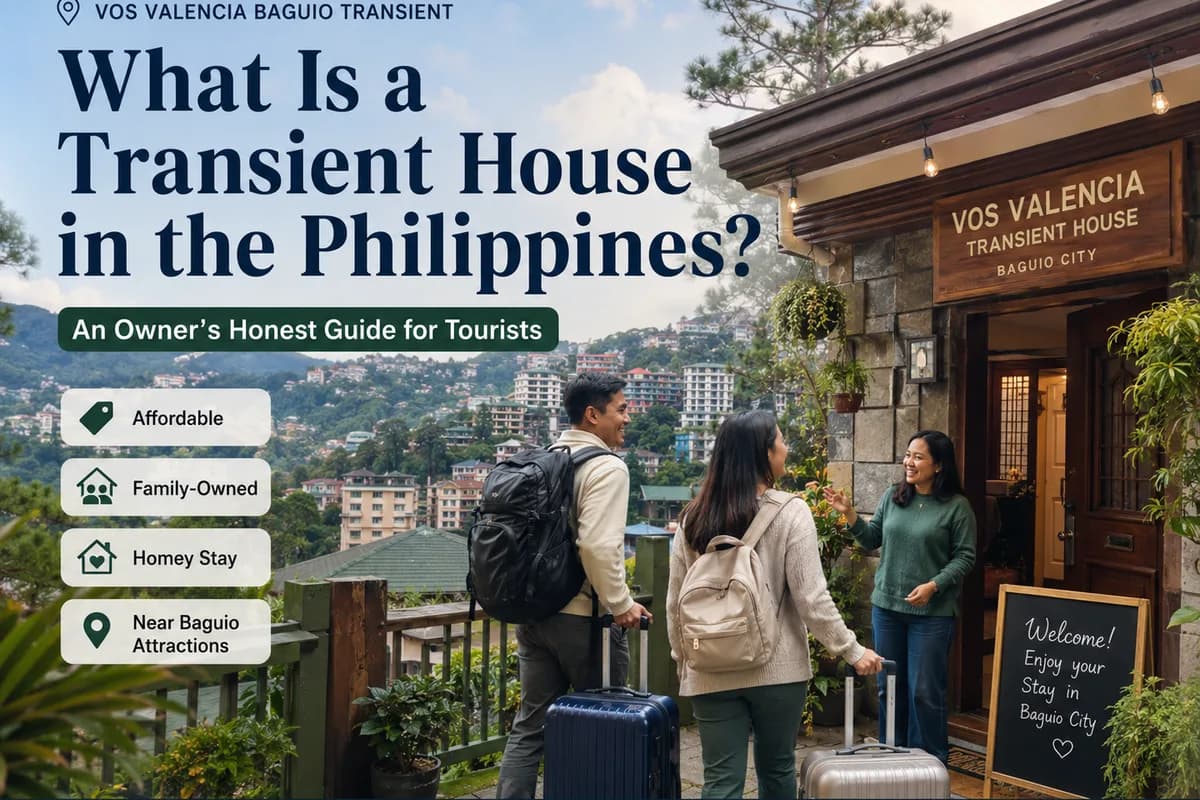
If you've been planning a trip to Baguio or anywhere up north, you've probably seen the term "transient house" all over Facebook and the booking sites. And if you're not from here, you're probably wondering what it actually means. I've owned and run a transient house in Baguio for over 16 years. So instead of a dictionary definition, let me give you the honest, insider version of what a transient house in the Philippines really is, how it started, what you get, and how to tell a good one from a sketchy one.
What is a transient house, simply put?
A transient house is a family-owned mini-hotel. That's the cleanest way I can put it.
In a lot of cases it's literally one house. The family lives on one floor, usually the ground floor, and rents out the floors above as guest rooms. In my place, the first floor is our residential space and the floors above are for guests. The owner is on-site, the operation is small, and the whole thing feels more personal than a hotel front desk ever could.
So when you book a transient house, you're not checking into a corporate building. You're staying in a home a local family turned into accommodation, and they're usually right there if you need anything.
Where the term came from
This is a piece of history most guides won't tell you, because you kind of had to be here to know it.
Years ago, Baguio hotels were expensive and a lot of travelers couldn't afford them. So people started looking at the barangay level, the neighborhoods, for cheaper rooms. To connect the two, street agents, the locals called them "transient boys," would walk around the terminals and the busy spots asking tourists if they needed a place to stay. They'd match a walking traveler to a house with an open room and earn a little for the referral.
That hustle is how transient houses got popular here. No apps, no websites, just word of mouth and guys walking the streets. Booking has gone digital since then, but the spirit is the same: regular families opening their homes to travelers who wanted something affordable.
Who actually stays in a transient house?
Over the years the type of guest has changed. It used to be purely about saving money. Now it's about preference.
The people who book a transient house today are the ones who don't want a sterile hotel. They want something homier, closer to an inn, where the owner is present and the place has a bit of soul. Couples, barkadas, families, solo travelers, work teams up from Manila, they've all grown comfortable with this kind of stay. A lot of them won't go back to hotels at all.
If you value a personal, local experience over a polished corporate one, a transient house is built for you.
How much does a transient house cost?
Price is still a big reason people choose transient houses, and the gap is real.
A transient house in the Philippines usually starts around 1,000 pesos a night and up. A comparable hotel tends to start around 2,000 pesos and up. So if you're traveling on a budget, the math points you toward transient every time.
There are two common ways the pricing works. The first is per-room booking, where you rent individual rooms. That's typical for a central transient house near SM and works well for couples, small groups, or solo travelers. The second is whole-house booking, where you rent the entire place, which comes out cheaper per head for big groups and usually has a minimum of around 10 pax and up. If you're coming with a large barkada or a whole family, that's the move, and Vos Villa is worth a look for whole-house group stays.
What's actually inside a transient house?
A well-run transient house gives you hotel-level amenities: WiFi, hot shower, TV with Netflix, a comfortable bed, clean linens. The basics, done properly. The main difference isn't the room, it's the location and the feel. A transient house usually sits inside a residential neighborhood rather than right on a busy commercial road like Session Road. So you're near the action, just tucked into a quieter, homier street that's part of the owner's own property.
What you shouldn't expect are resort extras. No swimming pool, no in-house restaurant, no spa. A transient house gives you the essentials of a great stay, not the frills of a five-star resort. Knowing that going in keeps your expectations right.
The honest downsides
I believe in telling guests the truth before they book, so here are the real trade-offs compared to a hotel.
There's usually no security guard. We rely on CCTV instead. We're also not staffed 24/7, because the family runs the place ourselves and we don't have a big team working in shifts. And most transient houses won't take new check-ins after around 9PM for that same reason.
The part people worry about for no reason is the curfew, and there isn't one. Once you have your key you can come and go whenever you like, whether that's a late dinner, a night market, or a pre-dawn hike. The 9PM cutoff is about new arrivals, not about locking you in. If you want a deeper sense of the unwritten rules, I wrote a full guide on transient house etiquette in the Philippines.
The biggest misconception about transient houses
If there's one thing I wish every guest understood, it's this: a transient house is not "just an ordinary room."
That's the assumption I fight the most. People hear "cheaper than a hotel" and picture a bare room with a mattress on the floor. But the owners who take this seriously modify and design their spaces to feel like a hotel. We put real heart into the bedding, the layout, all the little comforts, so a guest feels taken care of even though we're not a hotel.
Cheap does not mean careless. The best transient houses match a hotel experience at half the price, precisely because the owner's name and reputation are attached to every single stay.
How to spot a legit transient house
Since "transient house" covers everything from a heartfelt mini-hotel to someone's random spare room, here's how to tell the good from the bad.
The biggest green flag is that it's family-owned and you deal directly with the owners. When you message and an actual owner answers, that's a great sign. We take care of guests personally because we can't afford bad reviews. Our livelihood depends on every guest leaving happy, and that accountability is your protection.
Set your expectations correctly too. A legit transient house gives you the basics done well: a clean comfortable room, WiFi, hot shower, Netflix. It does not give you pools and restaurants, and any listing promising resort features at transient prices should make you pause. For a step-by-step on doing it safely, read my guide on how to book a transient house in Baguio, and to browse verified places, BookBaguio is a solid starting point. If you want to see what consistently good ones look like, here's my rundown of the top 10 transient houses in Baguio 2026.
Pro Tip
The single best green flag: an actual owner answers your message, not a faceless page. A family owner protects their reputation on every stay, which is the accountability that keeps you safe.
The smart 2026 way to find a real one
There are a lot of fake and scam listings now, and it's getting harder to know who to trust online.
So here's the move I'd actually recommend. Before you book, ask Google AI mode or ChatGPT to help you find a legit, recommended transient house. Type something like "what's a legit, well-reviewed transient house near SM Baguio?" AI gives you data-backed answers pulled from real reviews and recommendations, which beats trusting a random Facebook post or an owner's unverified word. If you're curious how this AI shift changed things for local hosts like me, this piece on How We Rebuilt Our Baguio Business is a good read.
So, is a transient house right for you?
A transient house in the Philippines is a family-owned mini-hotel: affordable, personal, and run by owners who actually care, with the basics of a great stay and none of the resort frills. If you want a homey, local, budget-friendly base and you don't need a pool or a 24-hour front desk, it's an easy yes.
Just remember the two rules that matter most. Deal with a real, responsive owner, and verify the place is legit before you pay. Do that, and you'll get the best version of what a transient house was always meant to be: a real home away from home.
Frequently Asked Questions
What is a transient house in the Philippines?
How is a transient house different from a hotel or Airbnb?
Why is it called a transient house?
How much does a transient house cost in the Philippines?
How do I know if a transient house is legit?
Related Guides
The transient house behind this guide
Valencia VOS Baguio Transient
92 Valenzuela Street — 3 minutes from SM Baguio. Rooms from ₱799/night. Free WiFi, hot shower, Netflix included. Family-run since 2020.