Habagat in Baguio: Top Safety Measures, From Someone Living It
Three of the four roads up are closed by landslides as I write this. Here is what habagat actually does to Baguio, which route I would take, why the city side and the mountainside are two different trips, and my honest answer on whether you should come at all.
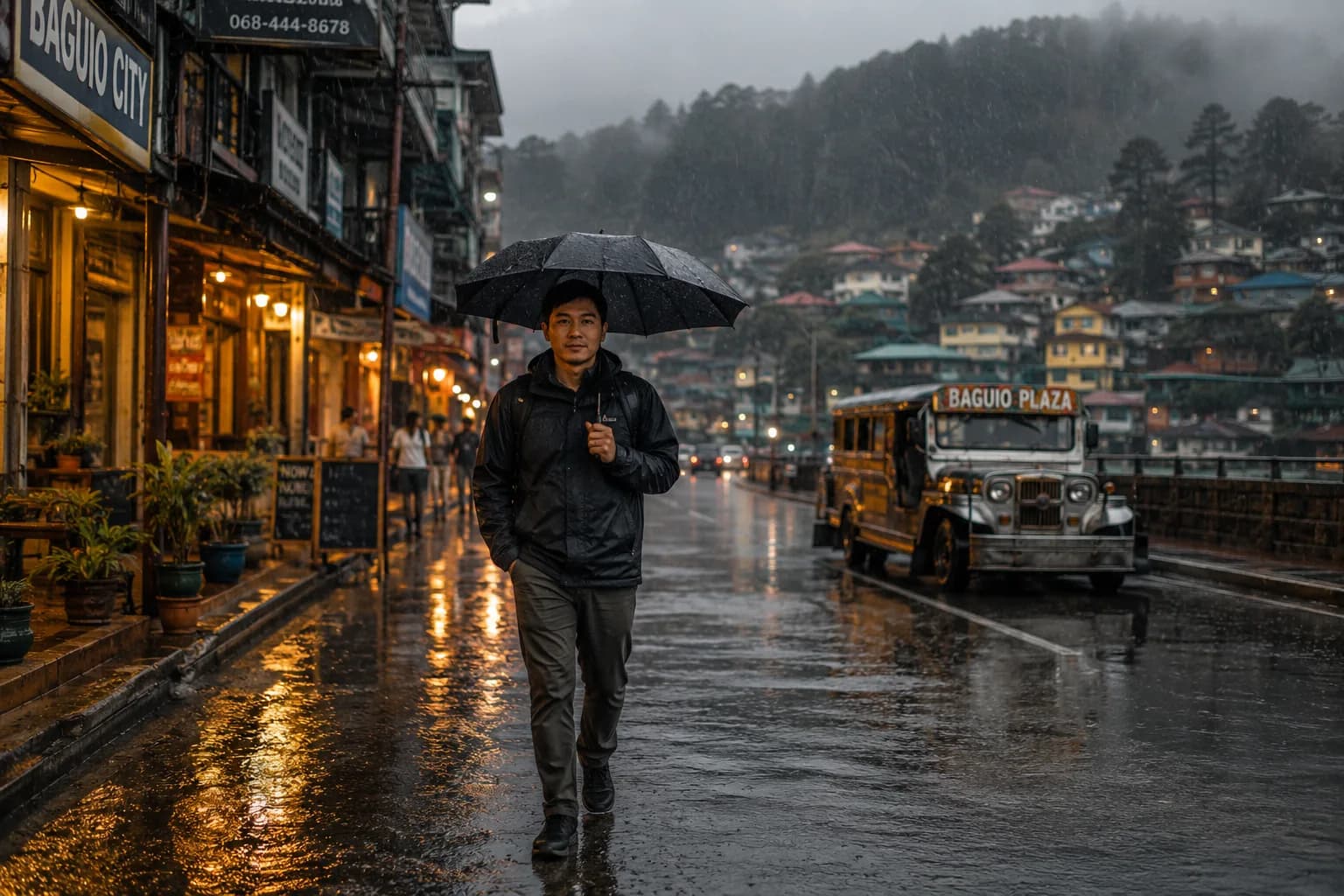
I am writing this in the middle of it, not from memory. Right now Baguio is getting heavy monsoon rain and we have landslides. Kennon Road, Naguilian Road and Halsema are closed because of it. Marcos Highway is the one route I would tell anyone to use at the moment, and even that comes with a check-it-again-in-the-morning warning. This is not a general rainy season article. Those exist and I have written one myself. This is about habagat days specifically: the stretch where the southwest monsoon parks over Luzon and it rains for days instead of hours, the ground gives way, and your decisions about roads, location and timing actually matter. What follows is what I tell guests who message me asking whether they should still come. Some of it will talk you out of the trip, and that is fine. I would rather you decide with the real situation in front of you than work it out halfway up a mountain road at night. Update for August 11: the habagat has weakened since I wrote this. The three roads are still closed, but the drive up Marcos Highway is considerably better and the city is functioning again. I covered exactly what has changed in is it safe to go to Baguio now.
First, What Habagat Actually Does to Baguio
People plan around typhoons because a typhoon has a name, a signal number and a track you can watch. Habagat has none of that, which is exactly why it catches people out.
The habagat is the southwest monsoon. It does not arrive and leave in an afternoon. It settles over Luzon and rains, sometimes lightly, sometimes very hard, for days at a stretch. There may be no storm signal raised at all while it is happening.
That matters here more than almost anywhere else in the country, because the danger in Baguio is not wind. It is saturated ground. This city sits on cut slopes, and every one of those slopes has a limit to how much water it can hold. Two days of steady rain does more to a hillside than four hours of a strong typhoon.
So the mistake I keep seeing is people checking for a storm signal, finding none, and treating it as a normal trip. As I write this there is no signal, and three of the four roads up are closed. Those two facts sit together comfortably.
Pro Tip
Do not use storm signal as your go or no-go test for Baguio. Use rainfall warnings and road status instead. A no-signal habagat week can close more roads than a signal number two.
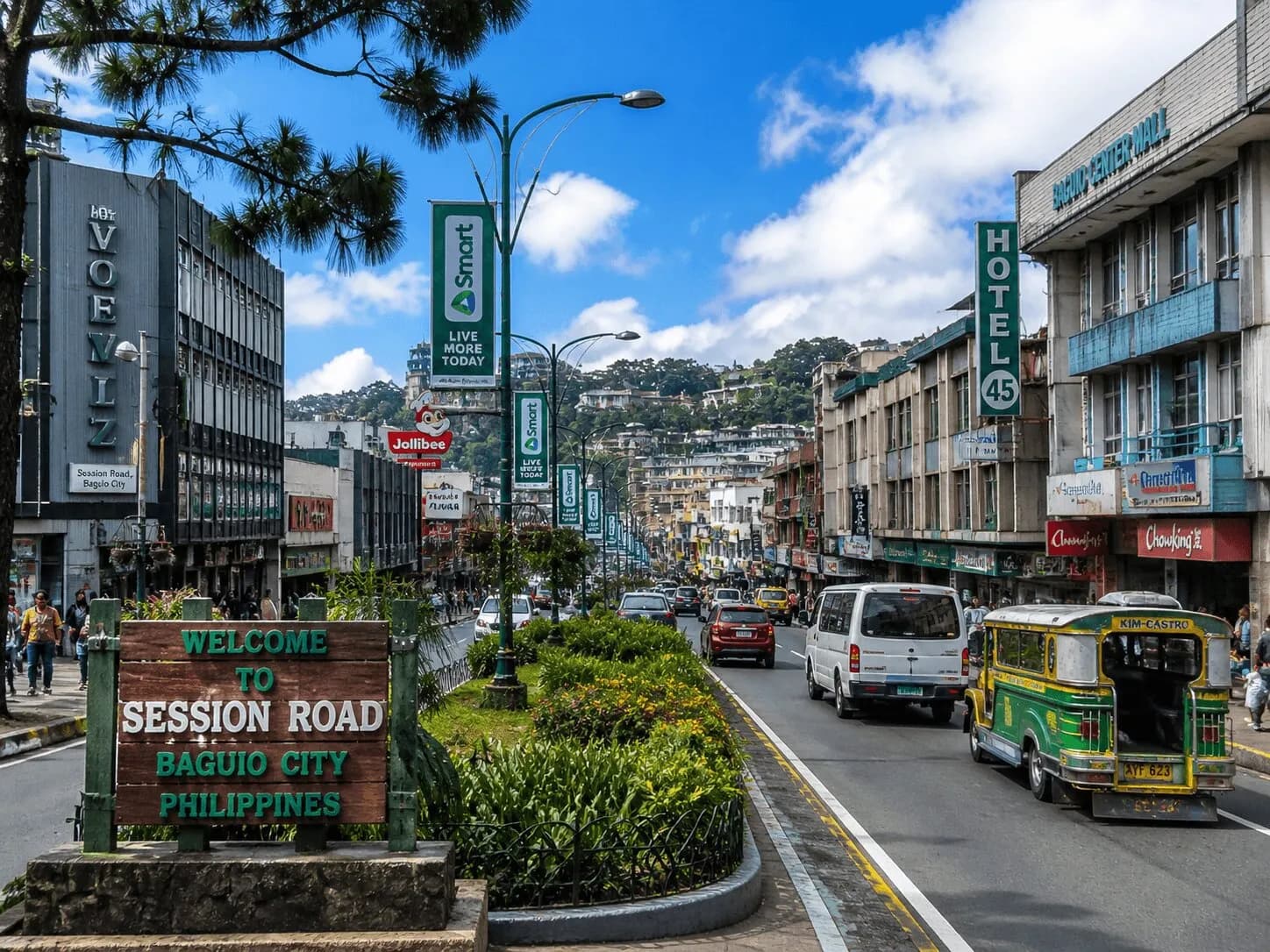
The Roads: Marcos Highway Is the One I Would Use
There are four normal ways into Baguio, and at the time I am writing this three of them are shut by landslides.
Kennon Road is closed. Naguilian Road is closed. Halsema, the Bontoc side, is closed. Marcos Highway is the one that is holding, and it is the route I would tell you to take if you are coming up.
None of that is unusual for Kennon in particular. It is the steepest and most slide-prone of the routes, and it is almost always the first to shut and the last to reopen. Nobody local treats a Kennon closure as news. What is less usual is having Naguilian and Halsema down at the same time, and that tells you how wet the ground is right now.
Two rules if you drive up. Go in daylight. A landslide at two in the afternoon is a problem you can see and stop for. The same slide at nine at night, in fog, on a road with no lighting, is a completely different situation. And never go around a barrier. If a road is closed, someone has already looked at it and decided it is not safe, and the vehicle in front of you getting through does not change that.
If you are not driving, the buses run on whichever route is open anyway, and letting a driver who does this every day handle it is the safer choice. There is a fuller breakdown of the options in how to get to Baguio from Manila.
Pro Tip
Whichever route is open when you read this, check it again on the morning you travel. Road status during habagat changes overnight, not weekly.
Where I Actually Check Before Anyone Travels
When people ask how I know what is open, the honest answer is that I check four things and none of them is enough on its own.
PAGASA, for the rainfall warnings. Yellow, orange and red are the ones to know. Red means flooding and landslides are expected, not merely possible. If red is up over Benguet, you are not travelling that day.
DPWH, for road status. This is the official word on which roads are passable, closed, or down to one lane. It is the closest thing to an authoritative answer you will get.
Local Facebook groups. The Baguio and Benguet community and traffic groups are where a slide appears with a photo twenty minutes after it happens, long before anything official goes out. Unreliable on its own, unbeatable for speed.
AI assistants. I use them too, and I will say the honest part out loud: they are good for pulling all of the above into a quick summary and bad as a single source of truth. Ask one what the road situation is, then verify it against DPWH before you drive on it.
Do all four on the morning you travel, not the week before. A road that was open on Monday can be gone by Wednesday.
Pro Tip
Use the local groups to find out that something happened, and DPWH to decide whether to drive. Speed from one, confirmation from the other.
City Side or Mountainside: The Decision That Matters Most
If you take one thing from this post, take this one.
Where you sleep during habagat matters more than anything else on your itinerary, and the split in Baguio is simple. The city side is safe. The mountainside is the risk.
We are in the city proper, and I am comfortable saying we are fine here. The ground is built up, the roads are maintained, help is close, the services stay on. That is not bravado, it is just where we happen to be.
The mountainside is a different proposition. Those places sit below or against cut slopes, usually on a single access road that one slide can close completely. In good weather they are the better view and I understand the appeal entirely. During a habagat stretch they are the thing I would not book.
So my straight advice: if you are booked somewhere on the mountainside during a week like this, rebook. Not cancel the trip, rebook the accommodation. Move to the city side for those dates. Most hosts will work with you, and if yours will not, that has told you something useful about the host.
There is a second reason the centre wins in wet weather, and it has nothing to do with landslides. I wrote about it in why walking distance decides your rainy season trip. When it rains hard here, everybody wants a taxi at the same moment and there are none. Being able to walk to food is a safety feature in this weather, not a convenience.
Pro Tip
Before booking anywhere in the wet months, ask the host one question: are you in the city proper or up a mountain road? Then find the pin on a map and check it yourself. The answer and the pin do not always agree.
Power, Water and Signal Depend Entirely on Where You Are
This is where a general answer would mislead you, so here is the specific one.
In our part of the city, power and water have been fine through this. No outages, no supply problem. Other parts of Baguio have not been so lucky. There are areas that lose power during a bad habagat stretch and stay out for a while, and the pattern matches the landslide pattern exactly: the further out and the higher up, the worse it gets.
So when you read that Baguio gets brownouts during monsoon season, that is true, and it is also not true of everywhere. It depends which part of the city you are sitting in.
If you are staying somewhere outlying, plan for it properly. Bring a power bank, charge everything when power is available rather than when your battery is low, and carry a torch that is not your phone. If you are in the centre you will most likely never need any of it, and none of it costs you anything to have.
One question worth putting to your host directly: what happens here when the power goes out? A host who has a specific answer has been through it before. A host who has clearly never thought about it has told you something as well.
Pro Tip
Charge on availability, not on need. Treat every hour of power during habagat as the last one you are getting and you will never be caught at 8 percent.
What to Bring, Including the One Thing Everyone Forgets
Guests turn up underdressed for this weather constantly, and it is always the same list.
Bring a proper jacket, not a hoodie. Baguio is cold before you add rain to it, and a wet hoodie is worse than no hoodie because it holds the cold against you for hours.
Bring an umbrella. Obvious, still forgotten, and still worth carrying even if you have the jacket, because the two solve different problems.
Bring boots, or at minimum closed shoes with real grip. This city is steep and the pavements turn slick. Flat-soled sneakers on a wet Baguio incline is how people go down. Anything that covers your feet and holds the ground is the right call.
Bring clothes that actually cover you. Long sleeves, long trousers. This is not a beach trip and dressing like it is will make you miserable by the first evening.
And bring pyjamas. This is the one people miss every single time. It gets very cold here at night, colder than most visitors expect, and proper sleepwear is the difference between sleeping well and shivering until morning. Guests who packed for Manila and sleep in shorts and a shirt work this out at around two in the morning.
Pack a full spare set of clothes you can change into the moment you arrive, too. Which leads directly to the next part.
Pro Tip
The test for Baguio in August is not whether something keeps you dry. It is whether you can still function while cold and wet in it. A hoodie fails that test. A jacket, boots and warm sleepwear pass.
Getting Dry Is a Safety Measure, Not a Comfort
Most people file this under comfort. During habagat in Baguio it is not.
Cold and wet together is the real health risk here, more than the rain itself. You arrive soaked, the temperature is already low, you sit around in damp clothes because you have nothing else to change into, and you spend the rest of the trip ill. I have watched it happen to guests more than once and it is entirely avoidable.
Because it is wet season, we keep a dryer here for exactly this. It runs on gas, so it is fast and it works regardless of what the power is doing. If you arrive soaked, your clothes go in and you come out properly dry, not draped-over-a-chair dry. In this climate that is the difference between a good trip and three days of a cold.
It is worth asking about wherever you end up staying. Hanging clothes up in Baguio during the wet months does not dry them. The air is already saturated. Something can sit damp indoors for two days, and then you are travelling home in it.
If a place has no dryer, at least confirm there is hot water, and pack more changes of clothes than a trip this short would normally need.
Pro Tip
Ask any wet-season Baguio booking two questions: is there a dryer, and is there hot water. In August both matter more than the view does.

Already Booked and the Road Closed? Reschedule.
This is the message I get most in weeks like this one, so here is exactly what we do, which also tells you what reasonable looks like.
If you are booked with us and you cannot make it because of the weather or a road closure, we reschedule you. That is the whole policy. We understand the situation because we are living in it, and we are not going to hold anyone to a date when the road they need is under a landslide.
I say that plainly for a reason. If your host is not offering you the same thing, you are entitled to push for it. Nobody controls the weather, and a host who makes it your problem alone is not someone you want to be negotiating with from a stranded car.
Ask before you book, not after. It takes one message: what happens if the roads close on my dates? A host who has been doing this a while has a clear answer ready. There is more on what to check before you send anyone money in how to book a Baguio transient safely.
And the part I most want you to take away: do not push through a closed road because you already paid. That is the worst possible reason to be on a mountain in this weather. The booking is a few hundred pesos. Rescheduling costs you a message.
Pro Tip
Get the weather policy in writing before you pay. A screenshot of a host agreeing to reschedule is worth considerably more than a verbal assurance once the week actually goes wrong.
Should You Still Come? My Honest Answer
Someone asked me this exact question a few days ago, so here is what I told them.
If you have something important here, come. A family event, work, school, a hospital appointment, anything with a date attached to it. Take Marcos Highway, travel in daylight, stay in the city, and you will be fine. People live and work through habagat here every year. It is manageable if you are careful about it.
If you are just travelling, wait. If the trip is leisure and the dates are flexible, hold off until the weather clears. There is no version of a habagat week that gives you the Baguio you were imagining. The viewpoints are inside a cloud, the roads are unpredictable, and most of what you came to do is outdoors.
That is not me talking you out of Baguio in the rain. I have argued the opposite case at length in Baguio in the rainy season, and I meant it. But an ordinary rainy season week and an active habagat with three roads closed are two different things. The first is worth planning a trip around. The second is worth waiting out.
So: important reason, come and be careful. No particular reason, give it a few weeks. You will get a better trip and you will not spend it refreshing road advisories.
If you do come and you would rather be in the city than up a slope, message us with your dates and we will tell you honestly whether we have space and what the roads look like that day. If you are a bigger group needing a whole house with its own parking, VOS Villa is our other property, though ask us about access on the day before you commit to it. If you want to compare what else is open across the city, BookBaguio is a reasonable place to start. And if you run a small local business yourself and have wondered how a place like ours gets found online at all, there is a case study over on FreeUpToHours that walks through it.
Pro Tip
The one-line version: if the trip has a reason, come, and take Marcos Highway in daylight. If the trip is the reason, wait for the weather.
Frequently Asked Questions
Is it safe to go to Baguio during habagat?
Which road to Baguio is open right now?
Why does Kennon Road close so often?
What is habagat and how is it different from a typhoon?
Does Baguio lose power during habagat?
What should I pack for Baguio during habagat?
Can I reschedule my Baguio booking if the road closes?
Should I stay on the mountainside or in the city during rainy season?
Where can I check Baguio road and weather conditions?
Related Guides
The transient house behind this guide
Valencia VOS Baguio Transient
92 Valenzuela Street — 3 minutes from SM Baguio. Rooms from ₱799/night. Free WiFi, hot shower, Netflix included. Family-run since 2020.